How the Healthcare Workforce Shortage Is Impacting Patient Care in the USA
Feb 13, 2026

The United States faces a deepening crisis in its healthcare system: a severe shortage of workers. Nurses, doctors, technicians, and support staff are stretched thin, leaving patients waiting longer, receiving suboptimal care, and facing higher risks. This isn't just a numbers game—it's a direct threat to patient safety and outcomes. As hospitals and clinics scramble to fill gaps, the ripple effects touch every corner of patient care. In this post, we'll explore the roots of the shortage, its tangible impacts, and paths forward, all under the lens of how workforce deficits are reshaping healthcare delivery.
The Scale of the Shortage: By the Numbers
Healthcare workforce shortages have escalated dramatically, especially post-COVID-19. The American Hospital Association projects a shortfall of nearly 200,000 registered nurses by 2030, while the Association of American Medical Colleges warns of a physician deficit exceeding 124,000 by the same year. Rural areas suffer most acutely, with some regions reporting vacancy rates over 20% for critical roles like emergency physicians and nurse practitioners.
Burnout plays a starring role here. Surveys from the Mayo Clinic reveal that 60% of physicians and 50% of nurses experienced burnout in 2024, driving early retirements and career exits. Aging demographics compound the issue: Baby Boomers are retiring en masse, while fewer young workers enter the field due to grueling hours, high student debt (averaging $200,000 for medical school), and better-paying alternatives in tech or finance. Immigration restrictions and training bottlenecks further limit the pipeline. The result? A system on the brink, where patient care bears the brunt.
Delayed Care: Patients Left in Limbo
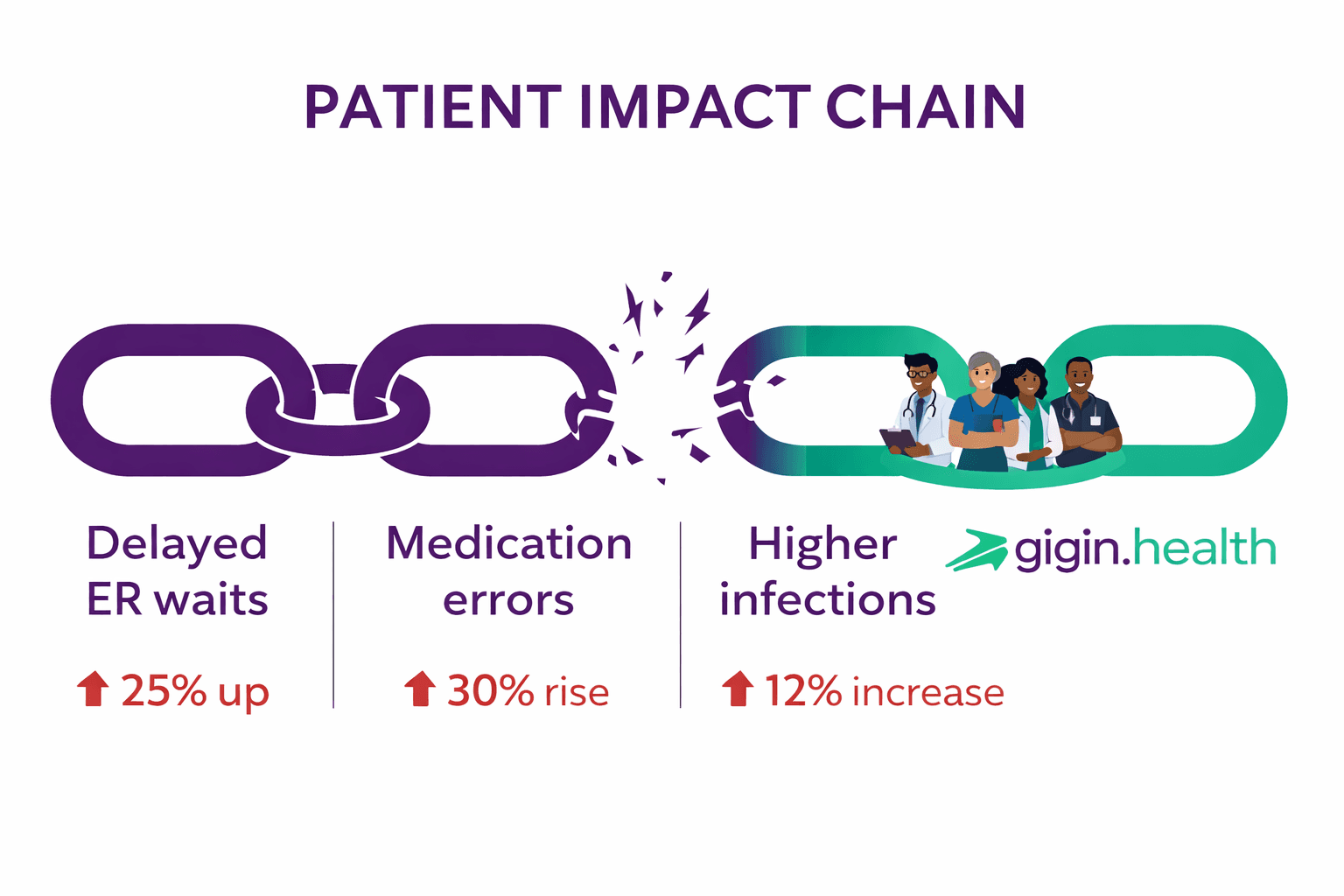
One of the most visible impacts is skyrocketing wait times. Overworked staff means triage delays in emergency departments—patients with chest pain might wait hours instead of minutes. A 2025 study by the Journal of the American Medical Association found that ER wait times have increased by 25% nationwide since 2020, correlating directly with staffing shortages. In non-emergent settings, routine procedures like colonoscopies or mammograms are postponed, allowing conditions to worsen.
This delay cascades into poorer health outcomes. For instance, diabetic patients missing check-ups face uncontrolled blood sugar, leading to preventable hospitalizations. In rural hospitals, where shortages hit hardest, ambulance diversions—rerouting patients to distant facilities—have risen 15%, per CDC data. Patients endure longer travel, exacerbating pain and risks like sepsis from untreated infections. The human cost is stark: a family waits in vain for a bed while a loved one's condition deteriorates.
Compromised Quality: Errors and Burnout's Toll
Short-staffed teams can't maintain high standards. Nurses handling double patient loads skip vital checks, increasing medication errors by up to 30%, according to a Leapfrog Group analysis. Diagnostic accuracy suffers too—overburdened doctors order fewer tests or misinterpret results amid fatigue. A 2024 Health Affairs report linked staffing shortages to a 12% uptick in hospital-acquired infections, as cleaning and monitoring protocols lapse.
Burnout doesn't just affect providers; it erodes empathy and communication. Exhausted staff deliver fragmented care, with handoffs between shifts leading to miscommunications. Patients report feeling like "just another number," fostering distrust. In surgical suites, understaffing delays elective procedures, turning non-urgent cases into emergencies. For chronic illness management—like heart disease or cancer—follow-up visits dwindle, spiking readmission rates by 18%, per Medicare data. Ultimately, quality dips, mortality edges up, and the trust patients place in the system frays.
Access Barriers: Widening Inequities
Workforce shortages amplify disparities, hitting underserved communities hardest. Urban safety-net hospitals, serving low-income and minority populations, face vacancy rates double the national average. This forces clinic closures—over 100 rural hospitals have shuttered since 2020—leaving patients without local options. Telehealth fills some gaps, but digital divides persist: 20% of low-income Americans lack reliable internet, per Pew Research.
Mental health services crumble under the strain. With a psychiatrist shortage projected at 30,000 by 2027, waitlists stretch months, pushing vulnerable patients toward crisis. Veterans and elderly in VA facilities endure similar woes, with staffing ratios exceeding safe limits. These inequities don't just delay care; they perpetuate cycles of poor health, higher costs, and generational disadvantage.
Economic and Systemic Ripples
Beyond patient care, shortages inflate costs. Hospitals pay premiums for travel nurses—up 50% since the pandemic—driving national healthcare spending toward $5 trillion annually. Patients face this through higher insurance premiums and out-of-pocket bills. Policymakers grapple with bandaids: loan forgiveness programs and visa expansions help marginally, but systemic fixes lag. Innovations like AI triage tools and team-based care models (e.g., expanding nurse practitioners' scope) show promise, yet adoption stalls amid regulatory hurdles.
A Call to Action: Bridging the Gap with Gigin Health
The workforce shortage demands urgent, multifaceted solutions—more training slots, competitive wages, mental health support for providers, and tech integration. But patients need relief now. Platforms like Gigin Health are stepping up with on-demand staffing solutions. Gigin Health connects vetted healthcare professionals—nurses, aides, and therapists—for flexible shifts, rapidly filling gaps in hospitals and clinics. This gig economy model reduces burnout by offering work-life balance, ensures 24/7 coverage, and cuts costs by 30% compared to traditional agencies.
Whether you're a facility manager combating vacancies or a patient advocating for better care, explore Gigin Health today at gigin.health. Sign up for instant access to a nationwide pool of skilled pros, and help restore the focus on what matters: quality patient care.
In closing, the healthcare workforce shortage isn't abstract—it's reshaping lives daily. By addressing it head-on, we can safeguard patient outcomes and rebuild a resilient system. The clock is ticking; action starts with awareness.