Why Talent Matching Matters More Than Ever in Healthcare
Jan 9, 2025
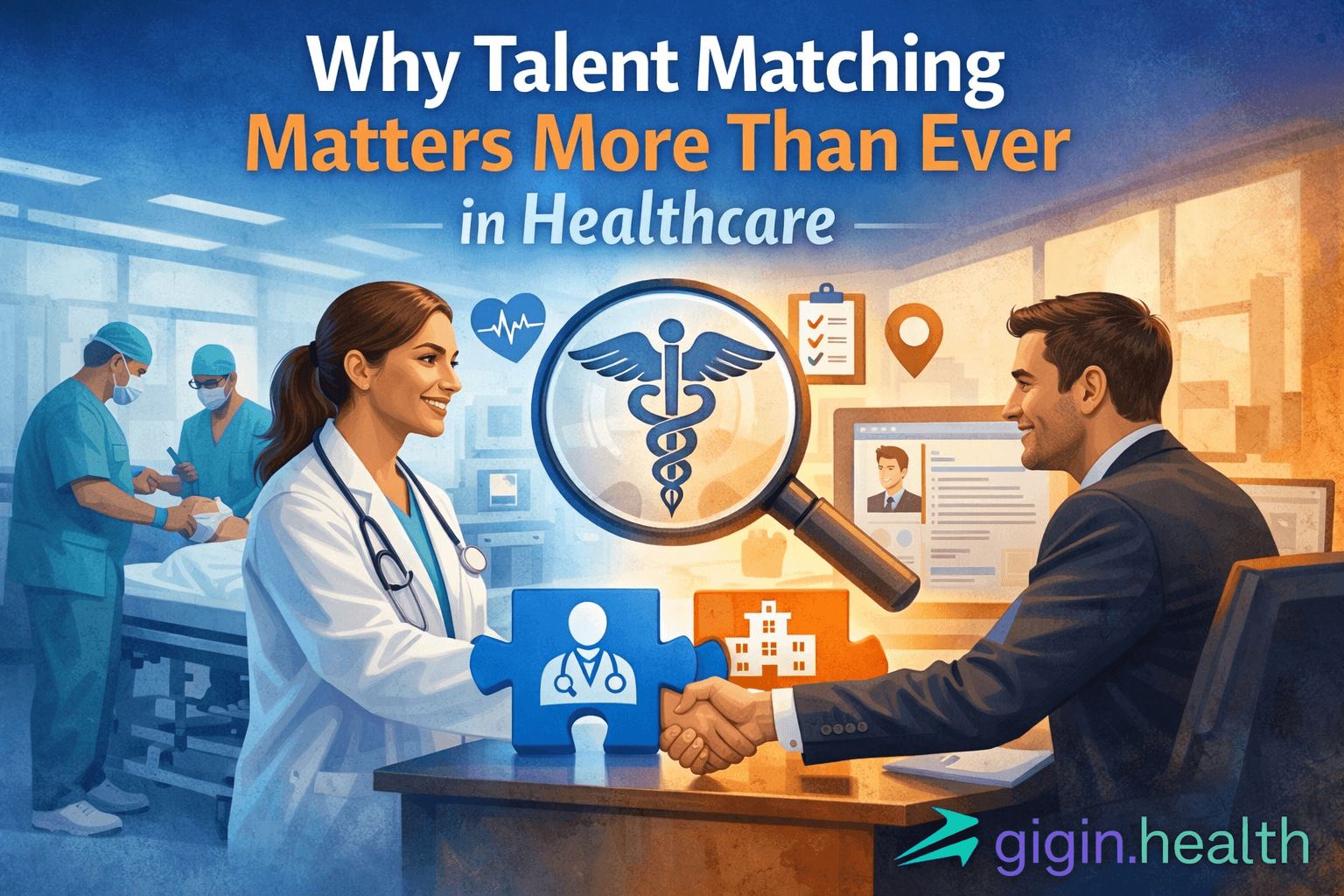
In the high-stakes world of healthcare, where patient lives hang in the balance, getting the right talent in the right role isn't just nice—it's non-negotiable. Talent matching—the process of aligning skills, experience, and personality with specific job demands—has always been crucial. But today, with staffing shortages, regulatory pressures, and the gig economy boom, it matters more than ever. Healthcare leaders who master talent matching don't just fill shifts; they build resilient teams that save lives and cut costs.
The Perfect Storm: Healthcare's Talent Crisis
Healthcare faces unprecedented challenges. The World Health Organization projects a global shortage of 10 million health workers by 2030, with India alone needing over 2 million more nurses and doctors. In the US, burnout drove 100,000 nurses out of the profession last year, per McKinsey reports. Gig platforms exacerbate this: temporary staffing now accounts for 20% of hospital shifts, but mismatched hires lead to 30% higher turnover rates.
Poor matching amplifies these issues. Assign a generalist nurse to a critical care unit, and errors spike—studies from the Journal of Nursing Administration show mismatched roles increase patient readmissions by 15%. In India's overburdened public hospitals, where gig nurses handle 40% of night shifts, one bad match can cascade into compliance violations or fraud risks during rushed onboardings.
Core Benefits: Precision Hiring That Pays Off
Talent matching transforms hiring from guesswork to science. Here's why it delivers outsized ROI.
First, it slashes turnover. Matched talent stays 2.5 times longer, according to Gallup, saving healthcare orgs $50,000–$100,000 per nurse replacement (including training and lost productivity). In high-volume gig hiring, where Gigin AI clients onboard 1,000+ agents monthly, precise matching cuts churn by 40%.
Second, it boosts patient outcomes. A 2023 Lancet study linked skill-job alignment to 20% fewer medical errors. Think of it like this: pairing a tech-savvy paramedic with telemedicine roles isn't just efficient—it's life-saving, as gig workers bridge urban-rural gaps.
Third, compliance skyrockets. Healthcare demands rigorous checks—background verification, certifications, HIPAA in the US, or India's Clinical Establishments Act. Mismatched hires often skirt these, inviting fines per violation. AI-powered matching flags risks early, ensuring verified talent fits regulatory needs.
Finally, cost optimization shines. Manual matching wastes 21 hours per hire (SHRM data); automation trims it to minutes, freeing HR for strategy. For gig platforms, this means scaling from 100 to 10,000 shifts without ballooning verification costs.
The Tech Revolution: AI and Automation Lead the Way
Gone are the days of resume roulette. Modern talent matching leverages AI, machine learning, and data analytics for hyper-accurate pairings.
AI Algorithms at Work: Platforms analyze 100+ data points—skills, certifications, past performance, and even soft skills via NLP from interviews. Gigin AI, for instance, uses predictive matching to score candidates 95% accurately, integrating instant background checks to verify credentials against national databases.
Real-Time Gig Matching: In dynamic staffing, algorithms match shifts in seconds. A US hospital needs an ICU nurse for a 12-hour gig? AI pulls verified profiles with exact specialties, reducing no-shows by 50%.
Bias-Free and Inclusive: Traditional hiring favors networks; AI democratizes access. It prioritizes merit, helping underrepresented talent—like women in healthcare—secure roles, aligning with India's push for 33% female workforce participation.
One example: A US telehealth provider cut hiring time by 70% using AI matching, dropping fraud incidents from 8% to under 1% via embedded verification.
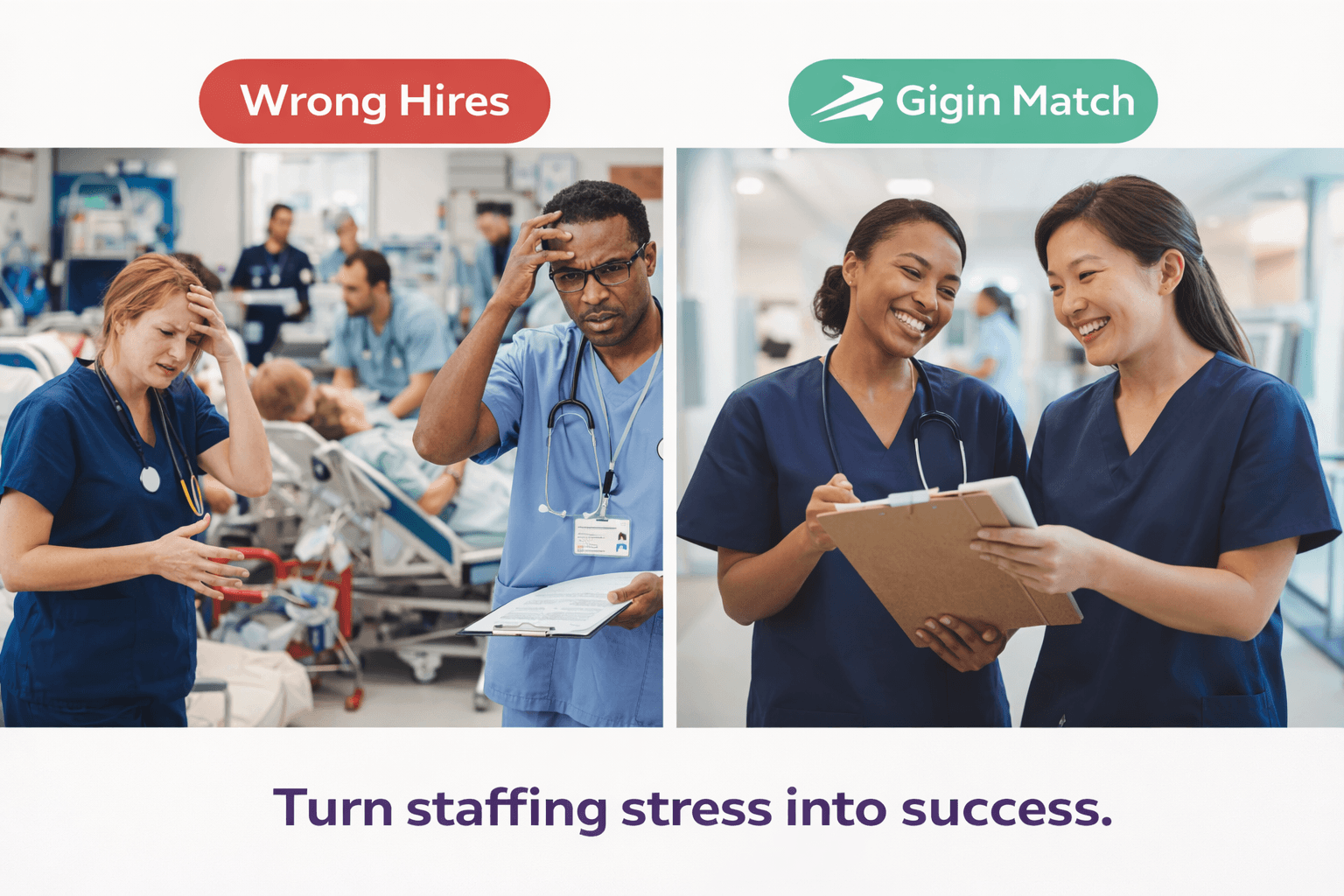
Real-World Wins: Case Studies That Inspire
Consider St. Francis Hospitals in the USA. Facing a 25% nurse vacancy rate, they adopted AI talent matching with integrated onboarding. Result? 35% faster fills, a 28% turnover drop, and zero compliance lapses in gig hires over six months.
In the US, Cleveland Clinic paired 5,000 gig staff via algorithmic matching during COVID peaks. Patient satisfaction rose 12%, with error rates halving—proof that tech scales quality.
These aren't outliers. Gigin AI clients in healthcare report 3x ROI within quarters, thanks to automated verification slashing manual reviews by 80%.
Challenges and How to Overcome Them
Talent matching isn't flawless. Data silos, legacy HR systems, and privacy concerns pose hurdles. Solution? Invest in interoperable platforms with GDPR/HIPAA compliance.
Start small: Audit current mismatches via exit interviews, then pilot AI tools. Train teams on interpreting matches—human oversight ensures nuance.
The Future: Talent Matching as Healthcare's Superpower
As AI evolves toward autonomous intelligence, expect hyper-personalized matching: VR simulations predicting role fit and blockchain for tamper-proof verifications. In India's gig healthcare boom—projected to hit $10B by 2028—this tech will be the differentiator.
Healthcare isn't just about treating patients; it's about deploying the perfect team. Talent matching matters more than ever because it turns chaos into precision and shortages into strengths. For leaders in staffing and compliance, ignoring it isn't an option—it's a risk.
Embrace it now. Your next hire could be the one that changes everything.
Ready to supercharge your healthcare hiring? Discover Gigin.Health, the AI-powered platform revolutionizing talent matching for hospitals and clinics.
Ready to transform your healthcare staffing?
Visit Gigin.Health today streamlines sourcing, matching, and onboarding with AI agents like Gia—cutting hiring cycles from weeks to days, ensuring verified talent, and boosting compliance effortlessly.
Book a free demo now and match the perfect talent to every shift. Your resilient team awaits!